
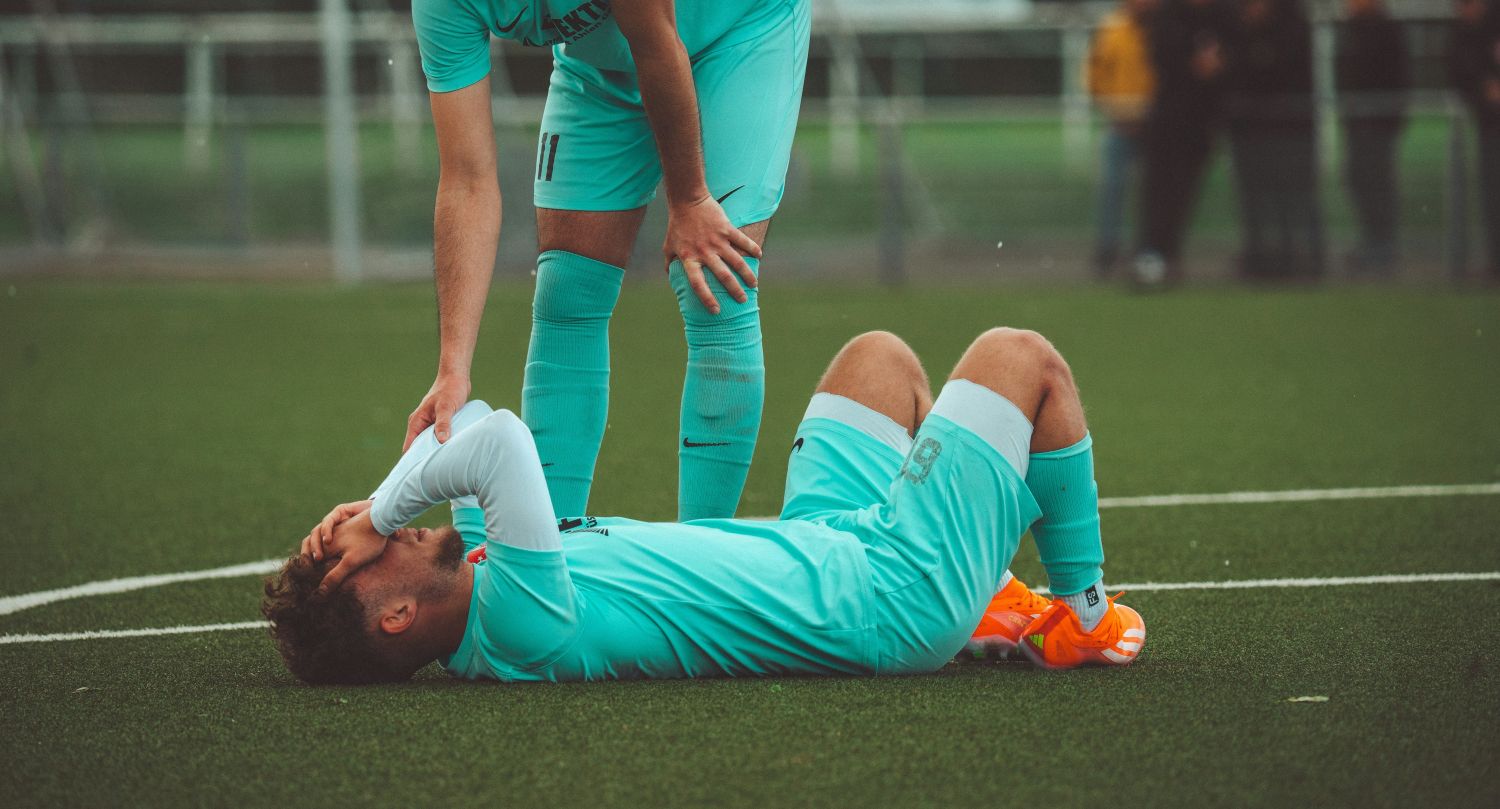

Episode 22: Head Injuries
Podcast Transcript
Understanding Head Injuries, Concussion and Cerebral Compression
Disclaimer and Introduction to First Aid Unboxed
Mark
This podcast provides general information and guidance on first aid treatment. It is not a substitute for professional medical advice or certified first aid training. Always seek the advice of a qualified healthcare professional for any medical concerns or before making any decision related to your health or treatment. In a medical emergency, always call for immediate medical help. Hello, brilliant. Welcome to First Aid Unboxed, the podcast that demystifies everyday first aid for you. My name is Mark Wakeley and I'm the producer and purely the idiot in the room who hopefully asks the questions that you want asked. We shall see. But I ask the questions of my first aid wizard and my first aid expert and fully qualified former nurse who now runs her own first aid company, which we will talk to you about a bit later, at Louise Madeley. Hi there, Louise.
Louise
Hi.
Mark
How are you?
Louise
I'm good, thank you. Excellent. I got back from holiday and raring to go.
Mark
That's all right for some, isn't it? Holidays. Right then. So. On my little piece of paper here, you've put down head injuries.
Louise
Yes.
Mark
Explain a little bit more about head injuries because before we started this, we always have a little chat and you went, well, it's not head injuries, it's head injuries but not head injuries and then it's this and that. So she's now going to explain all about head injuries for us.
Louise
Yeah, well, what you actually said was head injuries and concussion. And my immediate reaction was, well, concussion is a head injury, but it's not the only one. We talk about the big three when it comes to somebody has hurt their head and needs treating. Like I said, we do the big three. Concussion is one of them, but it's not the only one.
The Big Three Head Injuries: What Every First Aider Needs to Know
Mark
So head injuries covers a whole load of different things and we put them under the umbrella of head injuries. But there's lots and lots of things, as you say, that can be put under that. So how do we recognise what's going on here? Is it something that's quite obvious or is it something that can be quite hidden?
Louise
No, it can be quite subtle. And the thing to remember, the key is that this is about recognition of head injuries. This is not about diagnosing a head injury. The 2 are extremely different. It's not the role of a first aider ever to do a head injury assessment and to verify whether somebody has a head injury. It's purely early recognition of those symptoms and refer them on to medical professionals as quickly as possible.
Mark
And what sort of symptoms would we be looking for if we were in the situation?
Louise
Okay, so starting with concussion, this is basically when the brain gets rattled, if you like. From a clinical definition point of view, the thing to think about, you've got your concussions, cerebral contusion and cerebral compression are the three, the big three, if you like, when it comes to head injuries. The best way to determine which is which, the concussion is if you like the rattle when your brain gets rattled inside because it's not a fixed piece of kit. It's in the skull but then you have a surrounding area around it called the meninges and then you have a little potential space and then you've got a very hard skull which doesn't move. The skull is what it is. It's a fixed entity. So this squishy brain that's inside, if you rattle it, if you shake somebody really hard, then that brain's going to rattle. And it's not just that it's going to hit one side, it's going to hit both. So you may have been hit at the back of the head, for example, but you may get symptoms of a frontal injury because it's actually hit both the back and the front because it's rattled inside. So concussion, sorry, is a shaking of the brain. Cerebral contusion, and we've talked about the posh word for a bruise when you're talking about contusions, that's a physical bruising of the brain tissue itself. And then you've got compression, which is a very serious blue light, get them to hospital as quickly as possible, where you get pressure building up inside the skull. And like I said, if you imagine that squishy brain inside a very hard shell, that shell doesn't move, which means if you get swelling going on anywhere inside that area. We call it potential space because actually at the moment there isn't very much space but if you have a large swelling there it will push the brain downwards. It's got nowhere else to go. The only place it can go is into what we call the foramen magnum which is again a hard piece of bone and it's a ring if you like going down into the spinal cord and down into the vertebra. So it's going down your back. Worst case scenario is that the brain gets pushed too far down there and of course at the bottom of the brain, which is the bit that gets squished and gets pushed down, you've got everything that you desperately need for life. You've got the hindbrain, you've got the medulla. cerebellum, you've got all the really important, the pons, everything that's important for life is sitting in that bottom bit, you can't live without it.
Mark
And this is where your spinal cord joins the brain, isn't it? So it's all part of that.
Louise
Absolutely.
Mark
The major neural pathway, I think they would call it.
Louise
Yeah, end stage of this, you're talking about something when we refer to somebody as coning and it's end of life, they're not going to survive that if it gets pushed too far down. So it is really that this brain is sitting there and if you push it downwards, The only way it can go is through this hard bit of bone and that's end of life. So it's about recognising it really early and getting them to help as quickly as possible. It's not treatable, it's perfectly treatable, but we need them over in medical care as quickly as possible into resus, into theatres after that, get it treated.
Concussion Explained: Signs, Symptoms and What to Do
Mark
Okay then, so let's talk about concussion to start with because it's what probably most people know about, especially if you're a sports person or whatever, you know, rugby player or football or whatever. What signs will we be seeing? for concussion.
Louise
So it may be that you've witnessed it, say on a rugby field. As you know, I deal a lot with rugby first aid. And you may have seen them go down, hit their head. It could be that you've witnessed it. You may not know what the mechanism of injury is. But if somebody's presenting with dizziness, mild headache, feeling sick, seeing stars is a very common one because you've got your visual pathways just at the back. And if you've had your brain shaken, then seeing stars or any visual disturbance, if you like. I had it happen to me where I was hit temporal lobe and the one thing that I remember is a bright light, literally white like I can't describe it was that bright, just for a split second and then it was gone. Could be a brief loss of consciousness. These are all signs of concussion.
First Aid Treatment for Concussion: When to Remove Someone from Sport
Mark
If you're a first aider, what actions should you be looking at for concussion?
Louise
Especially if they've been on a rugby field or they've been doing sport, it's absolutely about take them off and sit them down. End of. You can't prevent a concussion occurring in that sense. It's already occurred, but you can remove them immediately. So take them off whatever activity they were doing, sit them down and seek medical advice. If they are showing those symptoms, dizziness, headache, might be memory problems, seeing stars, brief loss of consciousness. These are symptoms of a concussion. That is the time to take them off. That's the time to get them medical help. Not to do a head injury assessment and decide for yourself whether they need to stay away or go back on. They're not going back on if they've got any of those symptoms after hitting the head ever. It's done through, we use a graduated return to sport basically and you follow that pathway but the first stop is get them in, get them treated. And.
Mark
One of the things we're stressing during this podcast is any head injury, seek medical help, seek professional medical help. This is not, first aiders can only do a little bit of a, oh yes, that's concussion, but that's the end of their involvement. Ring 999, get medical help immediately.
Louise
Yeah, first aiders are not qualified at all to do neurological assessments, which is what's required. They need observation. More than likely, especially with concussion, it'll be conservative management. they're not going to need medical intervention, but they do need looking after and observing by medical professionals because we're looking for neurological deterioration after that.
Cerebral Contusion: Recognising a Bruised Brain and Skull Fractures
Mark
And also at this point, you don't know which of the three serious head injuries this could be as well. So the best thing to do is get professional medical advice on that. Yeah. So let's talk about cerebral contusion next. What are the symptoms that we should look out for? First of all, is it the same as, you know, is it banging your head basically or something like that or is there other things that can bring this on and what do we need to look out for?
Louise
Yeah, it can be blunt force trauma that's caused it. Bang on the head is a blunt force trauma technically. Usually they've got persistent severe headache. So at the time it may be that they fractured the skull. You can tell if somebody's fractured the skull because when you touch it, instead of getting a big egg, which is what you want to see, you know, when you've seen a child and he's hit his head as he's been running.
Mark
We've all been down that road.
Louise
Absolutely. And it comes up as an egg. You take him to A&E and we go, thank God for that. It's an egg. Happy days. And then unfortunately, because it's so vascular there and that's what's caused the egg, it then falls down and they end up with, have you ever seen an elderly person who's got bruising all down one side of the face?
Mark
Yes, I have.
Louise
Usually it starts with an egg on the forehead and then it goes down because it needs to find soft tissue to disappear back into. So it reabsorbs back into the body, but it needs soft tissue to do that. You can't reabsorb back into the skull.
Mark
Because the skull is too hard.
LouiseAnd that's all there is, yeah. There is just scalp and then skull.
Mark
Yeah.
Louise
That's it. Hence you've got an egg because it pushes out. But if you imagine if you fractured that bit, firstly it will feel, we call it boggy. When you press, and you press very gently, but when you press it sort of creaks and it feels a bit like the lower part of your thumb.
Mark
Yeah.
Louise
The fatty bit of your thumb when you press there. That's what it feels like.
Mark
Right, yeah, I kept that.
Louise
That's the consistency of it, but it feels a little bit creaky. So you can tell that there's fragments of bone there. What you will never get is an egg because you'll still get the ruptured vessels. You've had a blunt force trauma. But unfortunately, if you've got a break there, what will happen is all that blood will go inwards instead of coming out like an egg.
Mark
So it increases the pressure inside the skull.
Louise
Exactly.
Mark
Which is obviously what we're trying to avoid. And we'll talk about that compression in a minute.
Louise
Yes, so anybody who has a fractured skull, what you will always get is a certain level of bleeding. underneath the skull next to the brain.
When to Call 999 for a Head Injury: Suspected Skull Fracture
Mark
And again, we're looking at immediate referral here to A&E or for a paramedic or whatever.
Louise
Absolutely. If you suspect in any way that there's a head injury whereby they may have fractured their skull, then that is blue light, 999, get an ambulance to you. Don't even take them in. Bring the medical advice to you. So call for the paramedics.
Best Position for a Head Injury Casualty: Managing Intracranial Pressure
Mark
And with any injury like this, is it best to just keep the person still? don't move them about at all.
Louise
When it comes to head injuries, best position somebody can be in is lying on the floor with their head up at 30 degrees. So their spine and their head needs to be in alignment. Lying on the floor, preferably something underneath them because when people get cold it's from the ground up, not from the air temperature. So something underneath. One blanket underneath is the equivalent of four on top. So it's a big difference. You can always throw coats over somebody afterwards, that's fine, but get something underneath, lie them down. at 30 degrees, a bag underneath them will do, could be your first aid bag, whatever, and keep them in that position. It's dealing with the ICP, which is the intracranial pressure. Okay, so the pressure inside the head and that space, you want it as low as possible. If you've got somebody in that position, then you've got them at the optimum position to reduce that.
Mark
And gravity is doing some of the work for you there.
Louise
Absolutely.
Mark
It's the same as the raise the tail thing that you talk about all the time.
Louise
Face is pale, raise the tail.
Mark
Yeah.
Louise
Except for a heart attack, but yeah, for everything else. Heart attack is the W position. For anything else where somebody's pale, lay them down, lift their feet up. Face is pale, raise the tail.
Mark
And it pushes more blood towards their head.
Louise
Absolutely.
Mark
Lovely, which is quite the opposite of what we want, obviously, with these head injuries.
Louise
Yeah, literally the opposite.
Cerebral Compression: The Most Serious Head Injury and How to Spot It
Mark
So let's talk about what looks to be the most serious one, which is Cerebral compression.
Louise
Yes.
Mark
You've talked about this a little bit more. Again, we're looking at what are we going to look for this sort of thing and how would we know that this is going on?
Louise
Yeah, so quite often somebody may have concussion, they may have cerebral contusion, which will then lead on to cerebral compression, in which case we always talk about unequal pupils. That's actually, if you're looking for that, you're looking much later down the line than when they initially had the head injury. because quite often cerebral compression will happen a while after the incidence happened. So it could be that they've got unequal pupils. Your pupils should be between 2:00 and 3:00. Three is ideal, that's 3 millimetres in other words, the pupil being the black bit in the middle of the eye. It's not if it's enlarged, so it's not if it goes up to five or six. It's not if it's reduced, which may be 1 to 2 millimetres. We're talking about different sizes. So the left eye might be 6 millimetres, the right eye 2 millimetres, for example. There's a big disparity between the pupil sizes. If you see that, is always a very concerning neurological symptom. Deteriorating level of responsiveness, noisy breathing as well, if they almost sound rattly when they're breathing. All of these are symptoms of cerebral compression, particularly if you know that they have definitely had a head injury. Even if you don't know, that is still very concerning and worrying symptoms. They need to be blue lighted in.
Checking Pupils After a Head Injury: What the Glasgow Coma Score Tells Us
Mark
So when you're talking about the pupils, is that why doctors have a little flash torch thing that they put into the eyes of people when they're checking them?
Louise
Yeah, it does give us a good idea of neurological levels, so to speak. We use it as part of the GCS, Glasgow Coma Score. It gives us an idea whether there is medication on board. It gives us lots of insight into the brain, ending with the pupils, if you like. So it does give us a lot of information, but all of that information is for medical professionals, not a first aider level at all. The only thing you need to know is that the pupils are different sizes, they need to go in as quickly as.
Updated 2025 RC UK Head Injury Guidelines: Red Flags Every First Aider Must Know
Mark
So there are first aid treatment protocols that the government put out on the RC UK website and the latest ones talk about things you need to do. What do they tell us about head injuries, Sir Louise?
Louise
So 2025 October, all the guidelines were not changed so much, but they were tweaked. So it's all about now, call first and call fast. It's about that first responder, the first person on scene, making that call to the medical professionals as quickly as possible. And that's based on early recognition. We talk about the emergency red flags, any period of unresponsiveness or blackouts, vomiting since the injury, any of that, you're calling for help. a seizure or a fit after an injury. Clear fluid, it's the CSF, cerebrospinal fluid, which sits around the brain, around the spinal cord, but also it goes inside the brain as well. Unfortunately, if the meninges, those layers get ruptured because of a blunt force or something's happened there, then what happens is it leaks out of the meninges. and it's only got two places it can go. One is out of the ears, the other is down and out of the nose. Those are the only two places it can go. If you see that, it's like a straw coloured fluid. It's very watery. It's not like snot at all. It's not that consistency. It's much more watery. It may have flecks of blood or it may look blood stained. Either way, nothing is meant to come out of your ears. So if you've got any fluid coming out of your ears, that's an immediate red flag. But if it's coming out of the nose, Again, these are both really serious red flags. And problems with vision could be double vision, unequal pupils, anything that is different to how they were prior. Same with behaviour as well. Say you were on a rugby pitch and you've got somebody who's generally normally quite placid and easy going and so on. And then there's a head injury and later on he starts getting a little bit aggressive and not himself, but you can't put your finger on it. That is a very big red flag that something's happened, that it could be concussion or something worse. So treat those all as a red flag. The first aid treatment, firstly, call first. Casualties unresponsive, you call in for 999 and start with airway. It's the usual. If somebody gets a head injury as well, think about the spine because the mechanism of injury, yes, they've hurt their head, but it could have a direct relation to their spine. So make sure their spine is okay. If necessary, use the jaw thrust manoeuvre rather than the head tilt chin lift, because they may, if somebody's unconscious and they've had a head injury, for example, you don't know that neck is okay. In which case, use the jaw thrust rather than head tilt chin lift.
The Jaw Thrust Manoeuvre: How and Why to Use It for Head Injury Casualties
Mark
And what's the jaw thrust?
Louise
That's the one, we mentioned it in the guidelines previously. It's the one where you put your fingers to the back of the jaw, where it's called a TMJ. the mandibular joint here at the back.
Mark
Just below and forward of your ears.
Louise
Yeah, absolutely. Push it forwards rather than head tilt, chin lift. Jaw thrust it's known as, it's well worth looking up. It means that you don't need to move the neck. I've used it before with children for example who aren't able to move their neck as effectively as others and they're in a wheelchair and they become unresponsive, jaw thrust is the best thing to do.
Mark
And this helps clear the airwaves.
Louise
It does, yeah. It just means that the airway is patent or open while you're waiting for the ambulance to arrive. So jaw thrust manoeuvre, if you can check the spine, then do and control any bleeding as well. If there's a suspected fracture, then you need to put something on it. Do not ever try and compress or push down. Don't use direct pressure on something that you think may be a fractured skull, for example, because all you're going to do is press down inside. So be very careful if you are putting any wound covering over. It is just a covering to stop the bleeding. You're not pressing down.
Mark
It's not a pressure thing like you would have with a nasty cut.
Louise
Exactly. Yeah, absolutely. Monitor them using, remember the AVPOO.
Mark
No, but you'll remind us.
Using the AVPU Scale to Monitor a Head Injury Casualty
Louise
When it comes to response. So are they alert? Are they alert to voice? So their eyes are closed but they're responding. It's now got new confusion as well. So like I said with the lad earlier, if he seemed okay before, his usual self, and now there's behaviour changes, that can be classed as confusion. So anything new to their behaviour. Place your hands and give them a nudge. If they're not responding to that, then they are unresponsive. So it's the AVPU scale that we use to determine what response level they're at. Do it every 10 minutes, record the findings for when the paramedics arrive. And environment, keep them calm. Like I said, lying down, head up at about 30 degrees. Place a bag or something, coat underneath their head just to keep them elevated slightly. And then it's about aftercare. So the 24 hour rule, casualties need to be monitored by a responsible adult. So once they've been to A&E, if they feel that they are stable and everything's okay, then they will discharge to a responsible adult. So in other words, somebody who's not going out and having a beer that night, somebody that can keep an eye on you, wake you up every so often just to make sure that you're not deteriorating and keep that 24 hour rule. And then a medical review, especially if there's been a loss of consciousness, no matter how brief, they will need to be seen again by a medical professional. And with the handover as well, be clear, make sure that you've documented everything. If you've used anything, put the expiry dates on it when you do the accident form. And a verbal account of the mechanism of injury. It's very important that mechanism of injury.
Why the Mechanism of Injury Matters When Handing Over to Paramedics
Mark
So what actually happened to the?
Louise
Yeah, what happened and how did it happen is extremely important because we can gain a lot of information from that as to what the likelihood are, likelihood is of, could it be confusion, could it be that actually they're going into the start? of compression, etc. It gives us a much better idea if we get that full mechanism of injury and a good account of what happened.
Mark
So you can't be too careful, really, can you, with a head injury? Not at all.
Louise
This is the brain. You cannot be too careful, which is why certainly in A&E and recess we take it exceptionally seriously. If somebody's had any injury to their head, then we don't treat it lightly, put it that way.
What Happens When You Call 999 for a Head Injury in the UK
Mark
And if in any doubt, call 999. If you're in the UK, call 999, the emergency number or whatever the emergency number is in your country. Certainly in the UK, when you call 99, they will go through a questionnaire with you, right? They will start asking you questions. They will dispatch the ambulance and then they'll start asking you questions.
Louise
Absolutely, yeah. The first question they always ask, apart from which service do you require before you go through to the ambulance, is the patient breathing? If they are, then it's, is the patient conscious? And at that point, you can say yes, but on the AVPU scale, their P, for example, or their V, whatever. And then that will determine the questions that they ask afterwards.
Mark
But they have a series of questions for people who are not trained as well, don't they?
Louise
Which will help them to. Just follow whatever it is that they tell you. That's what you need to do.
About Madeley's First Aid Plus: First Aid Courses Online and Face to Face
Mark
Thank you ever so much, Louise. That is really, really good. I've learned more stuff again. I always learn more when I do these podcasts with you. So thank you very much for that. If people want to get in contact with you, what's the best way to do that?
Louise
Go on to my website, which is www..madeleysfirstaidplus.co.uk. There is a WhatsApp link there, so that will come straight through to me. or you can get me on e-mail which is enquiries at madeleysfirstdayplus.co.uk.
Mark
And that is any questions, any general questions and questions about the podcast. In fact, try and keep them about the podcast, probably best. Of course, Louise runs Madeley's First Aid Plus, which is a first aid course company, and she runs courses all the time online and face to face. So if you want to know more about that, just go to the website madeleyfirstaidplus.co.uk. We'll be back next month with another first aid unbox and demystifying everyday first aid for you. So until then, thank you very much and look after yourselves. And remember, if you're in doubt, call the emergency services.
Louise
Absolutely.
Mark
This is a 1386 audio production.
Train with us — head injury first aid
Knowing how to recognise and respond to a head injury could save a life. Louise covers concussion, cerebral compression and the latest 2025 RCUK head injury guidelines across our first aid courses:
- Emergency First Aid at Work — 1 day, covers head injuries and emergency response
- First Aid at Work — 3 days, covers head injuries and neurological assessment in depth
- Activity & Sports First Aid — RQF Level 3, essential for coaches and sports first aiders
- Airway Management — includes jaw thrust technique covered in this episode
- View all courses