
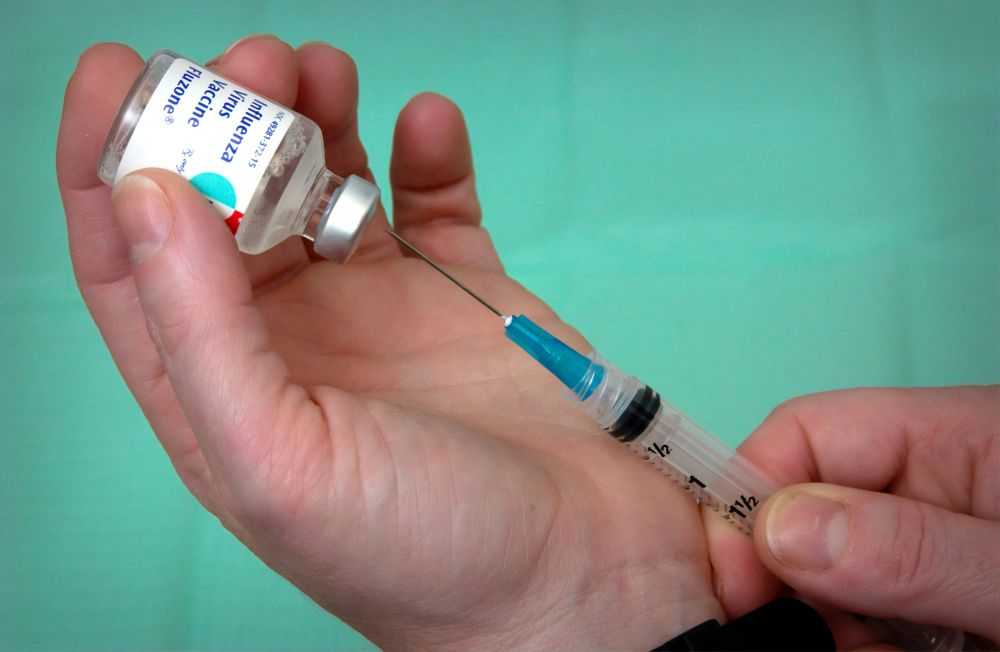

Episode 17: Winter Vaccinations
Podcast Transcript
Winter Vaccinations: Flu, COVID and Staying Well – First Aid Unboxed (Episode 17)
Important Disclaimer
This podcast provides general information and guidance on first aid treatment. It is not a substitute for professional medical advice or certified first aid training. Always seek the advice of a qualified healthcare professional for any medical concerns or before making any decision related to your health or treatment. In a medical emergency, always call for immediate medical help.
Introduction to First Aid Unboxed and Winter Vaccines
Mark
Hi and welcome to First Aid Unboxed. This is the first aid podcast that demystifies everyday first aid for you. This is episode 17 we're on now. Thank you to everybody who's listened to the previous 16 episodes. We're getting really good figures. We're very pleased with that indeed. So thank you to everybody. We'll read out all the addresses and all the details at the end of the podcast. So stay to the end if you want to ask Lou any extra questions or want any information that she may be able to help you with. Without further ado, let's introduce Louise. Louise Madeley from Madeley's First Aid Plus. Are we an afternoon? It's afternoon, isn't it? We've been talking that long before we started recording. Good afternoon, Louise.
Louise
Good afternoon.
Mark
Right, okay then. We're going to be talking about something which has been, for some reason, and I don't know quite why, become a controversial subject. And it baffles me that this should be controversial. But anyway, what are we going to be talking about?
Louise
We're talking about vaccinations. Winter vaccinations in particular. We're not talking childhood immunisations here. We'll do that in a completely separate podcast because that's a subject to itself. But it's the time of year. It's starting to get cold. My fire's gone on.
Mark
Our heating came on last week as well and my wife went, is it that cold already?
Louise
Mine came on, my husband walked past, then it got switched off. The usual.
Mark
It always seems to be the person who deals with the finance is the one who turns the heating off.
Louise
It is in our house, yeah.
Mark
Yes, waiting in our house is my wife. So, okay then. So, we're specifically talking about, you know, winter ailments and winter vaccines.
Louise
We are, yes.
Mark
So, where should we start with this?
Louise
Should we start with flu?
What Is Flu and How Is It Different from a Cold?
Mark
Okay, flu, which... Some people think they've got flu. I was told you've only got flu if you're lying in bed and you're so ill that you couldn't pick a 20 pound note up off the floor.
Louise
That does sum it up quite well.
Mark
Yeah, that means you've got flu. Other than that, you've just got a bad cold.
Louise
Yeah, absolutely. Yeah, influenza flu itself is not a bad cold in any way. The symptoms aren't even remotely similar. Influenza is an awful disease, an awful infection that kills people. It's a virus and it kills a lot of people every year. Simple as that.
Mark
Yeah, the numbers are quite extraordinary, aren't they, for the amount of people who are killed by flu. And I assume that the people who are vulnerable are people who are older people, I'd imagine, and people who've got issues with their immune system and things like that.
Louise
Thousands of people every year die from flu. It's as simple as that. And yes, the most vulnerable are the elderly, the very young, the very old, and those that have immune problems.
How Do You Catch Flu and Winter Viruses?
Mark
So what are the signs? What do we need to look out for? First of all, do we catch this from other people? You can't catch it from going out in the rain, can you?
No. I didn't think so. People go, oh, you'll catch a death of cold if you go out in this weather. And I always think, no, I won't, not unless I'm brushed up against someone who's already got another virus. So basically, you catch this from other people, don't you?
Louise
Yeah, I mean, if you're out and you're starting to get hypothermia, etc., then you're lowering your immunity and then you're at more risk of picking up viruses. But no, you can't catch it by going out with your hair wet, which is what my grandma always used to say. You're going out with your hair wet and it's 6 degrees outside, you'll get yourself a cup.
Mark
Absolutely.
Louise
Not unless I happen to bump into the virus itself. Absolutely, yeah.
Mark
So you catch this of other people, yeah.
Louise
You do, yes. It's an infection. It's a viral infection. And we're all aware of viral infections these days. It's more pertinent than ever since COVID. But yeah, exactly the same. It's a respiratory infection. You know, it's passed from one person to another on mucus and the same as COVID is.
Mark
It's one of the things that I've always found quite interesting is people talk about, oh, I've never taken a day off work. It doesn't matter how ill I am. I'll always go in. So what you're doing is you're giving your ailment to all the other people in the office.
Louise
Yeah, we do get that in the office occasionally. Somebody will come in with germs all over the place and they'll say, no, it's all right. I'll fight through it. No door out now. I don't want it. Simple as that. I don't want the rest of the office off with it. Get yourself home, do all the right things.
Mark
Yeah, it's the old Typhoid Mary syndrome, isn't it?
Louise
Absolutely. Yeah, totally.
Flu Symptoms: How to Tell Flu from a Heavy Cold
Mark
Okay, then. So what are we looking for then? What kind of symptoms are we looking for really, Louise, with what you would call influenza as opposed to a bad cold?
Louise
Yeah, I mean, influenza, like I said, it doesn't have the same symptoms at all of a cold. We've all been there where we've had a nasty cold, where we've got the cold virus. and we've got very snotty noses and possibly a little bit of a temperature, but just feeling generally rubbish, basically. That's a cold. Lots of mucus everywhere and just generally unpleasant.
Influenza is extremely different. You may well have huge temperatures. You get rigors where your temperature goes up and you start to shake, muscle aches and pains, feeling as though... You mentioned it earlier. My dad always said he had the flu once because he lay in bed and couldn't lift his head off the pillow. It was as simple as that for two weeks.
Mark
He wouldn't have been able to pick a 20 pound up off the floor then.
Louise
Absolutely, yeah. As soon as people start talking about those sorts of symptoms, we know that we're probably talking about the flu, genuine flu as opposed to a heavy, nasty cold.
Mark
Yeah, okay. And is that the most common of the, what are we called, the winter ailments, do you think? Is it a seasonal ailment, though? That's the other question.
Why Flu Is Seasonal and How Vaccines Are Planned
Louise
It is. It is a seasonal ailment. When it comes to doing vaccinations, what we're actually looking at are what the Centre for Disease Control and Prevention, what they're looking at are, for example, they'll go over to Australia and have a look and see which flu viruses, because there are many, which strain is most prevalent over there.
Once they've got that, they then come over here and those are the strains that we vaccinate against. Does that make sense? So whatever their winter was like, whatever was getting them in their winter, we then use in order to eradicate it here.
Mark
Yeah, so they're trying to vaccinate us against the current mutation of the flu virus. That's the idea of travelling to where someone's just had their winter.
Louise
Exactly, yeah. They go down to the southern hemisphere and vice versa. In the northern hemisphere, what is the most likely strain around here at the time, in which case they'll try and vaccinate against it in the southern hemisphere's winter.
Mark
And these viruses, there's lots of them and they're constantly mutating, aren't they, all the time?
Louise
Yeah.
Mark
Because their desire is to survive.
Louise
Absolutely. Yeah, viruses all survive a lot longer than we will as human beings, I'm afraid. That's the way it is. And yet they just keep mutating. So it's endemic, which just means that we live with it. You know, it's a part of life, a part of our bodies, a part of everything in this world.
Mark
As Elton folks say, it's part of the circle of life.
Louise
Absolutely. Certainly is.
Mark
Okay, so we're going to get on to what viruses do and what they are in a moment. Let's just talk about who needs to be vaccinated or if you're offered the vaccination, who should definitely take it.
Who Should Get the Flu Jab? (NHS Eligibility and Risk Groups)
Louise
Yeah, I mean at the moment you can get a free flu vaccine on the NHS if you are aged 65 and above. That's those who will be 65 as from the 31st of March 2026, have certain long-term health conditions, are pregnant, live in a care home, or they're a main carer for an older person or a disabled person, or they receive a carer's allowance. Basically anybody who is going to be in close vicinity of a vulnerable person.
Mark
And do you have to contact your GP or the authorities, or will they automatically send you an invitation to come in and have your vaccine?
Louise
It depends. If it's a case of you are eligible yourself, through age or disability, et cetera, or weakened immune system as well. So if you're on chemotherapy, that will be highlighted within the system of the GP practice and you will get an invite.
If it's that you are the primary carer of somebody, if I'm honest, I'm not 100% sure whether you get an automatic invite or whether you need to speak to your GP. Either way, speak to your GP, speak to the practice and just explain your situation.
I had flu vaccinations, I've had them anyway, because I'm frontline and have been for many years. There was a brief period when I wasn't, but I was still able to get the flu vaccine because my mother had a weakened immune system and my stepfather was going through chemo and cancer and so on.
So for I think one or two years, I did have to speak to the GP practice and they put me on the list, basically.
I am a huge advocate as a healthcare professional, as a healthcare worker, of all of us on the front line, all patient front, patient-centred people working with patients should absolutely be getting the flu vaccine and the COVID vaccine in my personal opinion, for the simple reason I wouldn't be able to live with myself if I caught something from somebody at work and then passed it to a vulnerable patient.
To me, that would be my safeguarding going wrong, but that's just my personal view. All healthcare workers have their own view and they're all entitled to feel as they do. Some choose to have it. I think most choose to have it, if I'm honest, but that's just going on.
They come into A&E, for example, Occ Health will come into A&E and deliver the flu vaccine and generally most people that I've witnessed have gone in and had it. But it's choice. Everything's down to choice, whether you decide to do it.
Mark
Yeah, I've had a number of, I've had the flu vaccines, I had the COVID vaccines as well. I'm a lifelong asthmatic, so I've got that, you know, respiratory issue and I'm always offered the flu vaccine.
I did turn it down one year because the year before it made me ill. I thought, I don't want to go through that again. But then I started taking it again and I've been fine. And it was probably just me being a little bit overdramatic, if the truth be known.
Louise
It's your immune system working.
Mark
Yeah, I mean, they give you the disease. That's part of how the vaccine works. I know it's not exact. We'll talk about that in a minute. Let's do that in a minute. Okay, I obviously said the wrong thing there from the face that Louise has just given me. Yeah, so what we'll do is we'll talk about that in a minute.
So I get offered all these vaccines, for those reasons. I'd also like to point out, people are living in other parts of the world, you will have various different ways of doing this. If I were you, I would check with your GP just to see what the rules are and what's available in your part of the world. Because I know we've got a lot of listeners in America and Australia and Canada and so on. So please go and check what your local health regulators say.
Long-Term Health Conditions and Flu Vaccine Eligibility
Louise
Absolutely. And again, people with certain health conditions will be eligible for flu vaccines, for example, the classic ones, so to speak, which is generally the same for all areas, are those who have conditions that affect your breathing, for example, because it is a respiratory disease and therefore you are at much more risk, if you like.
So people with asthma, especially if they need a steroid inhaler or tablets if they're on prednisolone for any length of time. COPD, chronic obstructive pulmonary disease. Used to be called emphysema, but yeah, it's an obstructive condition of the lung, basically. And cystic fibrosis as well. These are quite significant. That's hence you had your flu vaccine due to your asthma, for example.
Could be heart conditions as well, coronary heart disease or heart failure, chronic kidney disease, liver disease, cirrhosis, hepatitis, certain conditions that affect the brain and nerves as well, such as Parkinson's disease.
And as we know, my dad died of motor neurone disease, multiple sclerosis, cerebral palsy, diabetes, Addison's disease as well. Anything that causes a weakened immune system. Obviously, you're going to be more prone to all conditions, all viruses, if you've got a weakened immune system.
So if you've had your spleen removed or problems with your spleen, then clearly you need to have the vaccinations that are out there and sickle cell as well.
How Does the Flu Vaccine Work in Adults?
Mark
Let's talk about the vaccine itself. Again, lots of stuff talked about vaccines all the time. You know, has Bill Gates really put a chip in the flu vaccine so he can control us all? I doubt it, to be honest. Tell me about what the vaccine is. And I know there's a difference between the adult version and the children's version, but we'll talk about children's version in a minute. So let's talk about the adult vaccine now. What actually is it?
Louise
Yeah, you sort of touched on it earlier. Is the adult vaccine a live vaccine? No, it's not.
Mark
Right, so they're not giving you flu, basically?
Louise
No, cannot give you flu. It contains inactivated or killed flu viruses. So they are dead.
Mark
It means your antibodies are able to detect this as an invader of your body.
Louise
Exactly, yeah. It's tricking your body into thinking that it has the live vaccine in it. Obviously not enough and it's dead, it's inactive anyway, but it will bring those antibodies towards it, recognise it, which is what we want. And then if you do get the live flu come to you, then it will automatically defend, which is what we're after. Very different to the child vaccinations.
How Effective Is the Flu Vaccine?
Mark
So again, talking about the adult vaccine, and you may not know the answer to this question, you may not want to answer this question. How effective is it? I mean, does it actually stop a lot of people becoming very ill?
Louise
Yes. Evidence suggests yes, absolutely it does.
Mark
It's not 100%, is it?
Louise
There's no 100% on anything, ever. No. Medicine is never 100% on anything at all ever. Simple as that.
Mark
But by the law of averages, it will stop you suffering really badly with what the strain of influenza is kicking around.
Louise
Either stop it or it will severely impair its ability to kill you effectively and to make you more sick, which is what we're aiming for. We're aiming for the smallest amount of effect of the flu on you as we can possibly muster if it doesn't stop it completely. So yeah, that's what we're aiming for.
Mark
And it's not just about protecting you, it's about protecting the health service and everything else around it.
Louise
Absolutely.
Mark
Because, you know, the fewer people that are admitted to hospital with a serious virus, then those resources can be geared towards other people.
Louise
I've worked in respiratory, ITU, etc., A&E as well, and we know when flu season is kicking off. We know when it's on the way. We literally watch the wave come and go throughout the winter.
Mark
Yeah, they talk about it on the news, don't they, with the way it works. That's the adult vaccine. And it's usually administered using a syringe of some sort or a...
Louise
It does. Syringe and needle into the arm, upper arm.
Mark
Yeah.
Louise
Job done.
Needle-Phobic? How the Nasal Flu Vaccine Works
Mark
I don't have a needle issue, but I know quite a few people do. Yeah. Is there any other way it can be administered?
Louise
You can have the nasal flu if it's deemed appropriate, put it that way. And if there's good reason to, and also if you're not at risk of passing it to other people, because the children's flu vaccine is very different.
It is a live attenuated influenza vaccine known as nasal flu, basically. Influenza, which is given up the nose and you sniff it into the back of the throat and it goes down. This is slightly different. It's a weakened flu that you're getting. So it is a live vaccine, but it's very weakened. It's in a weakened state.
So your body can easily get to it and defend and recognise it. But it is live as opposed to the adult one, which isn't.
Children’s Flu Vaccine vs Adult Flu Vaccine
Mark
So obviously the child vaccine is different from the adult vaccine. Why are the two different vaccines for those two different groups?
Louise
When it comes to the live vaccine, ideally everybody could do with the live vaccine for the simple reason you get a stronger immune response, particularly in children, hence we do give the live. It's more effective for their immune responses.
It stimulates both mucosal and systemic immunity, which is what you're looking for when it comes to a broader protection anyway. And obviously it's a lot easier to stick it up the nose than try and get a needle into children.
But actually it's more about why adults get the inactivated as much as anything. So you've got the active, which the kids get, and you've got the inactivated, which the adults get.
Generally, the reason adults are having it is for an immunocompromised reason or elderly, vulnerable, frail, et cetera. So you wouldn't want to give a live vaccine to them?
Mark
So basically the children are healthier than the adults.
Louise
Yeah.
Mark
And the reason the adult is having the vaccine is because they're not necessarily that well, they've got other issues going on, but the children don't have, right, okay.
Louise
Not completely, but yes, generally that's the case.
Mark
I can definitely see the logic behind that. So what sort of age do children get this, the live vaccine that we're talking about? Do babies have it or is there like a minimum age where the vaccine can be administered?
Louise
Generally they tend to be age 2 to 3 and above and school age right the way through to year 11. So from reception to year 11. and age 2 to 3 as well. Certain children with long-term health conditions may have it as early as six months old, but generally it tends to start around the age of 2.
Mark
So basically it's a school thing because as we know the schools are bug warehouses anyway.
Louise
Yeah, children can get vaccinated from the 1st of September. My 2 are being vaccinated today, actually. They're going into their school and every child that has been consented by their parents is having the flu vaccine today.
The thing to be aware of, of course, is because it's a live vaccine, you must be aware of the fact that they could pass it on to grandparents or anybody in their house that's immunocompressed.
So you should have had the school IMS team phone up and go through a consent. I had mine a couple of days ago, Friday, and they go through absolutely everything. You do need to be a little careful because they will ask about allergies, the risk of anaphylaxis, etc.
But they'll go through all of that in the consent with you and whether or not you have anybody staying with you or close by that may be at risk, grandparents for example.
Flu Vaccine in Pregnancy
Mark
So you talked about, when you were talking about adults who would potentially have the vaccine, you mentioned pregnant women as well.
Louise
Pregnant women can be vaccinated from the 1st of September. Most eligible people, it'll be the 1st of October this year, but with pregnant people, all stages of pregnancy, it starts from the 1st of September.
Mark
And they have the adult vaccine, yeah.
Louise
They do, yes.
Mark
OK.
Louise
You can book on it either through your GP, you can go onto your NHS app. There's several different ways to book on.
Mark
Yeah, my GP usually sends me a text and says that we are open at this time and come in and have your, I think we just walked into the reception last time. They just did them straight away there.
Louise
Ours were at the local school this year.
Mark
You curled around. Well, there we go. Yeah, I think it depends on how much space your GP's practice has.
Louise
Absolutely.
Mark
But they can get the people in and out quick enough. So that's flu. Of course, we can't ignore the big COVID-shaped elephant in the room, which is COVID. It's still here.
People think that now the pandemic's over, that COVID is not a problem anymore. I can tell you right now, my wife's had COVID quite recently. So it is still with us. It is still there. And are there still vaccines for COVID now?
COVID-19: Ongoing Booster Vaccines and Who Gets Them
Louise
Yes, there are.
Mark
And can you ask for this or is it something that you will be told is available to you?
Louise
Again, the same as the flu vaccine. If you're eligible, then you will hear from your GP in due course.
Mark
So talk about the COVID virus, that's mutating all the time as well, just like every other virus does. So whatever they're giving us at the moment is the updated version.
Louise
Yes. Yeah.
Mark
And they're constantly doing the research on this, I assume?
Louise
Again, it's endemic. It's part of our life now.
Mark
It's here to stay, isn't it?
Louise
Absolutely. Yeah. So generally, certainly frontline health and social care workers can all be vaccinated. I'm just waiting to hear about mine as a frontline staff.
But also if they work in a residential care home or nursing home, domiciliary care providers, hospice providers, etc. Anybody who works in an environment with vulnerable people are being advised to get the COVID vaccine.
The people who they're targeting as much as anything when it comes to the winter COVID-19 vaccine, if they're aged 75 or above, not 65 like it is with flu, if they're aged six months to 74 years and have a weakened immune system because of a health condition that they already have, or if they live in a care home for older adults as well.
So it could be that they're under the age of 74, however, they do live in a care home, or they're cared for in a care home with much older people, in which case they're eligible to have it as well.
What To Do If You Catch Flu or COVID
Mark
Okay, so we talked about the viruses, what they are and how you will feel if you catch any of them. We've talked about the vaccines to do with these viruses.
If you do catch any of these, what's your next move basically? If you've got some of these symptoms that we've already talked about, what do we do next? What's the best way of looking after yourself and looking after someone who's close to you?
Louise
I always say look at it as a tiered system.
So the bottom tier, if you like, is speak to your pharmacist or send somebody if you're not feeling well enough or you don't want to spread the condition, brilliant. Send somebody else over to speak to the pharmacist for starters.
Self-help, treatment, advice, etc. on any minor illness you can get straight from pharmacists.
If necessary, then you can talk to your GP. If they feel that it's appropriate, they can either give you a remedy or they can suggest you go to the GP, make an appointment or NHS 111. Always a great resource. They can signpost you, they can organise appointments, do all sorts of things.
So start in that direction first. If you find that you've had all this advice, you've taken self-help remedies, they're not working, prescription medicines aren't helping, and you're getting more and more sick, that is the time that you need to call 999.
If you feel it's a medical emergency, for example, it could be that you feel as though you're becoming septic, in which case, look it up, it's something that you are at risk of with any infection, call 999. But obviously that's life-threatening emergencies.
Much earlier than that, speak to the pharmacist, speak to your GP, call NHS 111. That's the non-urgent medical advice.
Mark
There's a huge amount of advice out there, isn't there?
Louise
Absolutely.
Mark
You are suffering from these things.
Louise
There certainly is, yeah.
Mark
And I don't think people use their pharmacist enough, to be honest.
Louise
No, couldn't agree more. Yeah, pharmacists are a wealth of knowledge and that's what they're there for. They're in the community.
Mark
Incredibly highly trained people as well.
Louise
Absolutely. You can just walk in and speak to them. Simple as that. And they also have access to be able to speak to GPs, et cetera, if they are concerned about anybody, sort out appointments, et cetera.
Or again, NHS 111 as well. Once you've spoken to them, they will say whether or not it's appropriate for 111 or whether they need to phone an ambulance, for example. Pharmacists are definitely your first port of call, certainly should be.
Staying Warm and Well in Winter (Prevention Tips)
Mark
Okay, so what other things can we do?
Louise
Well, a lot of it is about prevention. It has to be, we always talk about medical and how to look after yourself once you have, but let's start with preventing it in the 1st place as much as anything.
Okay. And keeping yourself warm over the winter months does help prevent colds and flu, certainly from people who have more serious health conditions, whether it's that they've had a heart attack in the past, strokes, pneumonia, people with depression as well.
Somebody who has long-term depression often has a weakened immunity. And trying to keep your home at a temperature that is comfortable for you as well. We do not recommend having a temperature below 17 degrees. That is when you become in a weakened state as a result.
The more you eat, the warmer you get. But if you've got your house at a low temperature, you need more fuel in other departments, in which case you're eating more. And as a result, you are becoming more weakened. Does that make sense?
Mark
Yes.
Louise
So certainly the rooms that you're living in, living room, bedroom, etc., try and keep those above 18 degrees whenever possible, especially if you have a health condition. And keep your bedroom windows closed at night as well.
Ventilation is great, but at night temperatures do drop really low, in which case keep your windows closed.
Masks, Hygiene and Not Spreading Winter Bugs
Mark
Okay, it's funny to talk about prevention. I went to the Far East some time ago and like a lot of Far Eastern countries, it was Korea, but I certainly know this happens in Japan, is a lot of people wear masks.
And people used to think it was because of pollution. And then they used to think it's because they didn't want to catch germs off other people. The truth of the matter is, most people wearing masks have a cold or something and are trying not to give it to other people.
And that's why they wear masks in public. And people think it's completely different reasons, but that's the thing. They're being cautious for their fellow citizens basically.
Louise
Yeah, absolutely.
Mark
Which I think is quite interesting.
Louise
Yeah, when COVID first started, just prior to that when the warnings were going out and so on, I was working somewhere with some Chinese people and they were young people and the first thing they did was put masks on and they were asked to remove them so that they don't cause panic to other people and their only response was, but I'm only putting it on to protect you from me.
There was no understanding about anything else, it was literally: but if I have a cold, if I have any infection, the first thing we do is we put a mask on ourselves and stop the other person from getting it.
Mark
Yes, if you see a surgeon, he's not wearing a mask to protect himself from you. He's wearing a mask to protect you from him.
Louise
Yeah, exactly. Yeah. If people wish to wear masks, then absolutely if they've got an infection and they choose to pop a mask on, or if you see somebody with a mask, you know, don't be judgmental. It's as simple as that.
People are wearing them for a reason, whether it's that they don't want to catch something or they don't want you to catch it from them. This is something that we need to move past.
I've heard it too often when one person's been very judgmental over another because they're still wearing masks at certain times and chances are they've got an infection and they don't want you to get it. Let's look at it differently.
Being a Good Neighbour in Winter
Mark
So that's talking about prevention and how you deal with things if you're not feeling very well. What about being a good neighbour in these situations?
Louise
Absolutely, yeah.
Mark
So if anybody who you feel might be susceptible or have a...
Louise
Yeah.
Mark
Compromised immune system.
Louise
Older neighbours, friends, family members, they may need some extra help and support over the winter period. They may not realise how cold their house is getting, for example. You will recognise that where they don't, in which case pop over and see them, even if it's just for a quick cuppa and make sure that they are eating properly, drinking well, that their house is warm enough for them to be well in, as much as anything.
But just make that extra effort to go round and check on your neighbours. That's what it's about really.
Key Takeaways: Vaccines, Hygiene and Staying Home When Ill
Mark
So there we go. So we've talked about what the flu is, what COVID is, the vaccines for the various things, how you can prevent yourself from getting these things, hopefully. And if you do, how you can look after yourself and what you need to do and what you can do for your neighbours to be a good neighbour.
Have we got any takeaways for this particular episode? I think we've covered everything, but I'm sure there are things that you've been keeping back from us.
Louise
Really it's about avoiding passing on the viruses. You can't guarantee that you won't pick up a virus over the winter. You don't want to pass that on to other people.
So if you're feeling unwell, stay at home, avoid contact with people if you can, particularly staying away from vulnerable people. And we're talking little babies as well. Don't forget about the little ones. It's not just the elderly, babies as well, or anybody with a long-term health problem.
Stick away from them as much as you can if you're unwell at the time. Let people who need to come into your home know if you have symptoms as well. So if you're having a dinner party, just mention to them that you've coughing and sneezing a bit or whatever, and let them make the decision whether or not to risk it, so to speak.
And we all know this, but I'm just going to say it again. Cover your mouth when coughing or sneezing, bin the tissue immediately, then wash your hands. We know all this, but life goes on and we slip into bad practices, etc.
Just make sure, you know, sneeze into it. My kids are brilliant at this actually, because they've done it from age 4.
Mark
Brainwash them into it.
Louise
Absolutely, pretty much, yeah. They do. They do it straight into their elbow. They've never known any different. They don't remember before, particularly.
So, yeah, sneeze into your elbow, use tissues, wash hands more than you would during the summer months.
Mark
That's fantastic. And don't be afraid to wear a mask if you feel that's what you need to do to not let anybody else get infected by you. That's the point we're making with the mask.
Louise
It is.
Mark
Yeah, brilliant. And keep away from work. Oh, dear me, the amount of people.
I remember working in an office once and a guy who came in with the most horrendous cold. And I think slowly we all fell one by one over the next two weeks.
Louise
Why take a whole workforce down?
Mark
Exactly. And I think it's something that people don't think about. I think they're being martyrs. when the truth of the matter is they're not.
How to Contact Madeley’s First Aid Plus
Mark
Louise, if people want to get in contact with you to ask you any questions about what we talked about or anything else on any of the podcasts, what's the best way for them to contact you?
Louise
Send me an e-mail at enquiries@madeleysfirstaidplus.co.uk or you can visit my website. There's a contact form on there. Send me a message. I will get it and I will most certainly respond. It's www..madeleysfirstaidplus.co.uk
Mark
Brilliant. That is fantastic. And you also run courses, don't you? Online and face to face.
Louise
Yeah, I've got an emergency first aid at work course coming up middle of the month. And yes, I go into businesses a lot doing all sorts of first aid from catastrophic bleed right the way through to young children, three and four years old. So yeah, give me a call or visit my website to find out more.
Mark
And people can book through the website if they need to.
Louise
They can, yes. Just go to the booking page. It'll show you what dates I've got different courses running and book on.
Closing and Next Episode Teaser
Mark
Okay, so we'll be back next month with another First Aid Unboxed. I'm not too sure what we're going to be talking about because we've not brought all our notes with us today, have we, Louise? But I promise you it'll be another very interesting topic, but we will definitely be back. So look out for that.
Thank you to everybody who's been listening. We've had a fantastic response to the podcast. So we're really, really pleased. If you do want to get in contact, then you know what to do.
Great. Thank you, Louise. And we will speak to you in a month's time.
Louise
Absolutely. Looking forward to it. Thank you.
Mark
This is a 1386 audio production.
Episode 17 — Winter Vaccinations
Keep your team safe all year round.
Good health and first aid preparedness go hand in hand. Make sure your workplace is covered: