
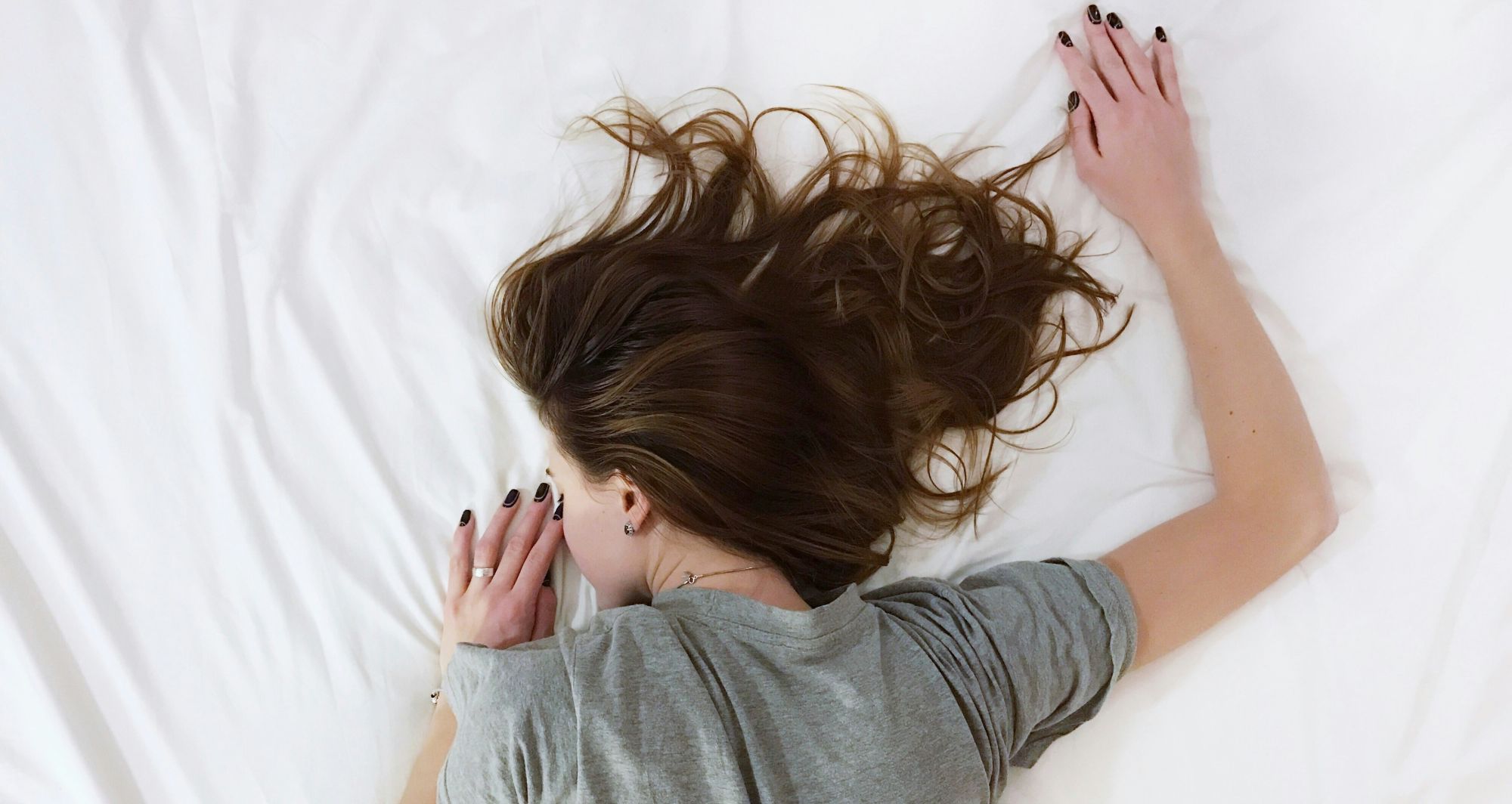

Episode 20: Sleep, Health & First Aid Insights
Podcast Transcript
First Aid Podcast Disclaimer & Introduction
Mark
This podcast provides general information and guidance on first aid treatment. It is not a substitute for professional medical advice or certified first aid training. Always seek the advice of a qualified healthcare professional for any medical concerns or before making any decision related to your health or treatment. In a medical emergency, always call for immediate medical help. Hi and welcome to the First Aid Unboxed podcast. This is episode 20. We couldn't believe it when we were talking about it before but we're up to 20 now. My name's Mark Wakeley, I'm just the producer and the idiot in the room basically who asks all the questions I hope you want asked. But the expert here is Louise Madeley from Madeley's First Aid Plus. So hello Louise, how are you? I'm very well thank you. Good, very pleased Have a good Christmas and New Year.
Louise
Yes. Happy New Year.
Mark
Yes.
Louise
I'll leave it there. Yeah, please with the other side, to be fair.
Why Sleep Is Essential for Health and Survival
Mark
That's probably a good thing. On these podcasts, what we try and do is we try and demystify everyday first aid and stuff like that, and also help you lead a healthier life as well, you know, giving you advice. So what's our subject today, Louise?
Louise
I'm going to talk about sleep.
Mark
And you were telling me before, it is one of the most important things to lead a healthy life.
Louise
Yeah, absolutely. People don't realise just how, we all talk about sleep and I haven't had enough or I get too much or whatever, but people don't appreciate just how important sleep is. I mean, the figures show clearly that when it comes to sleep, you're more likely to die earlier from lack of sleep than you are from lack of food, for example.
The Impact of Sleep on Overall Health
Mark
So it's a big part of your overall health.
Louise
Yeah, absolutely. If you abstain from sleep, if you abstain from water, for example, you're likely to die fairly quickly, within days. The same with food, you are likely to die within approximately 60 days. With sleep, if you abstain from sleep, it's 11 to 30 days. Before you die.
Mark
So it's more important than food.
Louise
Yes.
The UK Sleep Gap – Are We Getting Enough Sleep?
Mark
Okay. There's going to be a lot of people out there thinking, I don't get enough sleep. Well, we're going to talk all about that during the podcast. So if you have a sleep issue, have a listen to this and then we'll give you details at the end where you can get in contact with Louise if you want to know a bit more. Okay, so on my notes here, you've talked about the sleep gap. Give us a little overview of where we are as a nation with our sleep habits.
Louise
Yeah, generally the UK public are under sleeping and it's astronomical, actually, when you look at statistics, how much we're under sleeping. It's an hour a night. So that's a full night's sleep every week that we're missing out on. And we need that sleep. It's not downtime. It's a bit like an active night shift, basically for the brain when we're asleep. So it's not that the brain just switches off and that's it, goodnight, see you in the morning. That is when the brain does everything it needs to do to metabolically repair itself and get itself.
How Sleep Repairs the Brain and Body
Mark
So it's like the maintenance period for the brain. Because it's not getting you to do all the other things that you normally do when you're awake. It's thinking, right, I can clean myself up now.
Louise
Yeah, which is why if you don't get sleep, it's only between 11 and 30 days before you die and all your systems fail. because it's not removing toxins from the brain, it's not repairing everything ready for the next day. You will firstly become very psychotic, then you will start having seizures, and eventually you will go into multi-organ failure.
Mental Health vs Physical Health – The Sleep Connection
Mark
So what we think is a mental thing, it actually is very much a physical thing.
Louise
Absolutely, well, I say this all the time, don't I? There's no difference between your mental and your physical. The two are intertwined fully at all times, mainly through neuroscience, but yeah.
Sleep, Weight Gain and Metabolism
Mark
Wow. When I think about it, I mean, I've heard lots of stories about, you know, I'm a few pounds overweight, shall we say. I've heard lots of stories about if you don't sleep well, that it's really easy to put on weight. And a lot of people who are quite, you know, in the obese category are people who don't sleep very well at all.
Louise
Yeah.
Mark
And it's almost like a spiraling thing as well.
Louise
Yeah, absolutely.
The “Factory of Sleep” Explained
Mark
There we go. I need more sleep.
Louise
You do indeed.
Mark
That's what I need. Let's talk about what you call here the factory of sleep.
Louise
Yeah, you know what I'm like.
Mark
Well, what I like about this is you sort of explain things very well in terms that we can all understand. So you're not a big fan of an acronym, are you, sir?
Louise
No, I don't like an acronym particularly. They're good for some people, but not for everybody. But a story will always sell. People will always understand things when you tell them a story and you embed what they need to learn within that story. Then people will take it away and they will remember it. It's stored in the brain in a different way to an acronym.
Sleep Cycles and the 90-Minute Rule
Mark
So if we talk about the Factory of Sleep, what you're talking about here is almost like a production line. It goes through a series of events. through the night or through the sleep cycle, should I say?
Louise
Exactly. And that's what it's about. It's about having these sleep cycles, which last approximately 90 minutes per cycle. And hopefully you will get somewhere around four, four and a half is the idea.
Mark
That's the sort of the healthy amount.
Louise
Yes. So obviously 90 minutes times that by four, that's how much sleep you should be getting. And that's what scientists are gauging it on when they talk about the sleep deficit and the fact that we are losing an hour a night. 'cause they're looking at what's the optimum number of hours that you need to sleep based on these sleep cycles, and that you get enough sleep cycles each night in order to be physiologically well.
REM vs Non-REM Sleep Stages Explained
Mark
Okay, let's go through the different stages then we've got here.
Louise
Yeah, so to start off with, think of your brain as having, like we said, sleep cycles, but within those cycles, you have stages of sleep that you go through, okay. So the first stage of sleep, you've got non-REM, and then you've got REM sleep. Your non-REM is your non-rapid eye movement sleep, okay? And then you've got your REM, which is your rapid eye movement. Now the REM, I think of a bit like a VR suite. You know, when you go into your dream, rapid eye movement, they're going absolutely bonkers in your eyes, and at the same time, you're dreaming. So if you wake up and you remember your dream, it's just because you've woken up in that stage of sleep. But more, in some ways, more importantly, you've got your non-REM sleep. Now, the way the brain works, it needs that non-REM because it acts almost like a filing clock. So all those memories that you've taken throughout the day, while you're in non-REM, it then takes them and it files it all the way. So it's clearing out all those memory banks and putting them into long-term storage, basically, and that's what you need.
Mark
So it's putting it into your hard drive.
Louise
Yeah, effectively.
Mark
If you're looking in a computer terms.
Louise
Yeah, absolutely. After you've done that, you then go into a deep sleep, which I think of a bit like a biological car wash. So you're going through a car wash of flushing out all the metabolic waste, your beta amyloid, in other words, it's the metabolic side of things. It's flushing it all out, clearing your system so that it's healthy.
Mark
Clearing the cookies on your computer.
Louise
Basically, yes, in a nutshell. Exactly the same as our kidneys and our liver do that physiologically and clear out the waste from the physical body. This is what non-REM sleep is doing in your brain. Now, if your kidneys or your liver aren't working, then you will end up with a prolonged problem. It's the same in your brain. If it isn't constantly, every night, clearing everything out, and keeping it healthy and keeping it working, then it's going to go wrong.
Mark
It just gets clogged up and it does.
Louise
Yeah, yeah, absolutely. And you need to have X number, preferably four times to go through those sleep cycles per night in order for you to keep that health at the right level.
Mark
So that's why we need these 90 minute cycles is because you go right through all the things that we're talking about here.
Louise
Exactly.
Mark
Stages. So that's that's stage two.
Louise
Yeah. Stage three then is your Your VR suite. So it's your REM sleep. Processing emotions, resetting the amygdala, you know, the fight and flight bit, switching it back off, clearing it out, and making it healthy again. So when we talk about somebody who's not getting enough REM sleep, then they are more likely to be emotionally unregulated during the day, et cetera. And that's when I talk about people can go into psychosis if they don't get enough of the right sleep. over a prolonged period. And again, we were talking about 11 to 30 days before you can hit death. So we're not talking very many days. That's why the army, etc., going back in time, used to use it as a form of... It was used as torture. It was a method of torture by keeping people awake.
Mark
Sleep deprivation, isn't it? Yeah, yeah.
Louise
Absolutely. They'd keep them awake for four or five days, by which time they were blurting out truths about... Whatever it is that, yeah, exactly. Yeah. Yeah.
Mark
Right, okay. So yeah, yeah, I sort of see that. It's tortured without actually physically torturing someone.
Louise
Yeah.
Mark
But it's a psychological thing, isn't it?
Louise
Yeah.
Mark
So we're about halfway through our 90-minute cycle now.
Louise
Yeah.
Mark
After your VR suite, your REM.
Louise
Yeah.
Mark
What do we move on to next? What's the next thing?
Louise
Well then, you go back to your non-REM and your stage one and two. Non-REM 1 and 2 first, then you go into non-REM 3, then you go into REM sleep. The first two is about your sleep spindles, and that's your internal filing system. Then into your deep sleep, which is your car wash, cleaning it all out. Then you go back into your REM sleep, which is your virtual reality and your dreaming.
Mark
Okay.
Louise
And how you feel when you wake up is really based on which stage of sleep you're going through at the time.
Mark
Okay, so at what point do we normally wake up? Is it during this REM sleep or after that.
Louise
Well, our biggest problem is that we're not waking up in the light sleep. We are waking up when our alarm tells us to wake up, which could be any stage of sleep, because 7 o'clock is when you wake up and that's the time that your alarm is set, regardless of where you are in your sleep cycle at the time. We were talking about it just before we came on air. I use something that makes an enormous difference to me, which is a smart alarm. So I use a sleep tracker that has a look at my sleep. because I was feeling very inert first thing in the morning and really struggling to wake my brain up of a morning. And I knew that I was waking up in the stage of sleep that's the worst stage, that makes me feel very tired when I wake up. In which case, I use the Smart Alarm, which wakes me up in light sleep within 30 minutes of my alarm. So I need to get up at 6 o'clock to get the boys up. I set the smart alarm to go off between half five and six o'clock. And what it does is it wakes me up this morning, it was 20 to six, yesterday it was 10 to six. Whenever my body, whenever my brain is in light sleep, that's when it wakes me up and I am awake alert immediately and I'm up. Now the thing to be wary of is using your snooze. There's nothing worse than snoozing.
Mark
You're quite anti-snooze buttons, aren't you?
Louise
I'm utterly anti-snoozing and there is a very good reason behind it. 00 you're due to wake up, you set your alarm, and off it goes, you've woken up, you're feeling really tired, you press snooze so you can have that extra 10 minutes. Now, what you're actually doing is you've woken up in whichever stage of sleep you've woken up in, because your alarm's set and that's what time it's got you up, and then you press the snooze. So what happens is you then go back to stage one. No matter where you woke up in that stage of sleep you were in, You then get reset because you've woken up and it goes back to stage one. Now, your brain needs to go through that full stage. It doesn't want to be woken up during that process. It wants to do the full stages, but it can't because you've just woken yourself up. So then you go back to stage one and you start to sleep again. 10 minutes later, you're woken up. You set the alarm again, you go back to stage one, and you wake yourself up. Press it again, you go back to stage one. So all you're doing is resetting this process to go back to stage one, and at no time are you actually doing that 90 minutes of sleep, which is what your brain is saying, Please let me do it, please let me do it.
Mark
So you're going to be permanently tired, really.
Louise
Well, you then suffer from something called sleep inertia, and that can last anything up to four hours. So you're less focused, you're less alert. You go into this inert state and it can take up to four hours to get over it before you're back to where you should have been when you first had that alarm go off.
Mark
All right, okay.
Louise
So yeah, snooze buttons, do not use them. When the alarm goes off, count to three, get up. Go three, two, one, up and move. Because otherwise you will just start that.
Mark
I can't imagine myself doing that in the morning.
Louise
Try the smart alarm.
Mark
Yeah, I will do. I will.
Louise
Because at least then you're in a better position because you're waking up in light sleep, which is when things are going on around you and you're most likely to hear them and you're more likely to wake up at that stage anyway. But it's not necessarily the exact time that your alarm has demanded you get up.
Mark
So the next thing we're talking about here is regulators. So I've got this written down here. I'm not too sure what it all means, but Louise is going to explain it all to me now. So what are we talking about there?
Louise
Yeah, so we all have a biological clock and we talk about it with women. This is slightly different. This is your biological clock as far as sleep's concerned. Now there's two regulators that you need, which are adenosine, which is your Process S, that's your sleep pressure. So it's a bit like mail piling up in your mailbox throughout the day. Melatonin, on the other hand, is a hormone and that job is to dim the lights. It's to signal the start of the night shift. When I go on shift at say seven o'clock at night, you get to eight o'clock and the lights get dimmed in the hospital. Everybody's getting ready for that night shift. That's basically what your brain is doing. It's producing melatonin. Starts about seven o'clock in the evening. So from seven o'clock you start to get more melatonin. That light dim is going on inside your brain telling you that you're going into power down, basically. It's at its highest around one o'clock in the morning. Now, on top of that, we also have adenosine. The reason we have it is because it's waking us up of a morning. So we'll get a huge amount piled into us, and it's a bit like something that clicks the on switch, so to speak.
Mark
And these are naturally occurring things.
Louise
Yeah, yeah, yeah. These are all neurotransmitters and hormones going on in our brain that are, A, waking us up, and B, and B, settling us back down again to go to sleep. It's important that we have a good regulation of those. They are what regulates your brain to wake up and to go to sleep.
Mark
So, I mean, it's really that whole thing about, you know, we've not really come very far since being cavemen. because there's a natural sleep cycle which tends to go with how the light is outside as much as anything else.
Louise
Absolutely. We mess it around by doing shift work, for example. I mean, I've done shift work for 30 years, and that's why they say approximately seven years earlier, people who do shifts tend to die. That's the general rule of thumb. And it's down to the fact that we don't have that regular circadian rhythm. But the fact that we use alarms to wake ourselves up instead of using the light, that's how we always used to, that's how all animals do it in the animal kingdom. They don't sit there with an alarm in their nest going off saying, Right, time to go and get that worm. It's all done on lights.
Mark
Modern society, not very good for our sleep patterns.
Louise
Not great.
Mark
Yeah. Okay, so they're the various things that will help us sleep and wake us up naturally in the natural world. What happens when these things fail? We're talking about the factory and we're going through the process. When the machinery fails, what do we do then?
Louise
When we talk about adenosine, it's really the mail building up. As I said before, it's a bit like having a mailbox. Now, one thing that we use to block the mailbox is caffeine.
Mark
Yeah.
Louise
We all do it. It's preventing the adenosine from delivering the messages of tiredness to us. That's the problem, because it's doing that. Obviously caffeine is the last thing that you want at night time. And I am horrendous at it. I drink caffeine right up until bedtime and I shouldn't. Having said that, I can go to sleep very quickly anyway. So it doesn't really cause me an issue.
Mark
Is there a higher than a crash as well? Do you crash much more afterwards?
Louise
Yeah, absolutely. Anything that lifts you up is going to come back down. we say what goes up must come down. It does. And it's the same in your body. If you give yourself anything, sugar, caffeine, whatever it is, a stimulant to lift you up, it will come back down again. And you've got to be prepared for the crash as much as you have. What you want is dopamine, which is the mood stabilizer, and means that you stay on an even keel, rather than the ups, down, up, down. Dopamine is extremely important for the body and for the brain and for its functioning. and it also messes around with your melatonin as well. Cortisol is a huge problem, which is your stress hormone. They rise first thing in the morning, that helps you wake up. However... If somebody is stressed, anxious, late at night, this mail carrier for cortisol arrives at the wrong time and puts the body into high alert. And this is what happens to me when I'm on a night shift. I used to do shifts that went from 5 p.m. till 1 a.m. And because I was in that stress state during that shift, finishing at 1 a.m., my brain was saying, right, I'm in night shift mode, thank you very much, I'm quite happy to stay up till late. But I couldn't because that was the end of my shift, go home. I would sit there doing the washing, ironing, all sorts of things. But I knew that I shouldn't be doing that because I then needed to wake up at 8 o'clock as normal and I'd be back at work the following morning. So sometimes if I was doing that shift, I wouldn't actually go to sleep for nearly 48 hours. Really dangerous to do. But my body and my brain would not accept that 00 AM, I then needed to switch myself off?
Mark
And it's not when you've got something on your mind, nagging on your mind, and you're sitting there staring at the cracks in the ceiling.
Louise
Absolutely.
Mark
Same thing, isn't it? Your cortisol levels are really high because you've got an anxious thing on your, whatever the anxiety is that it's creating.
Louise
Yeah, absolutely. And that's the worst thing that you can do.
Sleep Disorders – Apnoea, Insomnia and More
Mark
So one of the things that a lot of people talk about with sleep and the dangers that we have of sleep, and when the machinery fails, as you've put on here, is sleep apnea?
Louise
Yeah.
Mark
So please explain what that is and how it can cause difficulties.
Louise
Yeah, I mean, sleep apnea itself is actually just when breathing stops and starts while you're asleep, basically. The most common type, obstructive sleep apnea, is the one that most of us know about, OSA.
Mark
Yeah, you've put kink in the hose here.
Louise
Absolutely, that's exactly what it is. It's basically when the pipe itself gets kinked off while you're asleep. You know how I've described you're lying on your back. Your tongue is the only muscle in your body that's only attached at one end. I'm also the only person that finds that remotely interesting, to be honest. It's still just a muscle. It's only attached at one end, which means when you go to sleep, it flops backwards. As a result, you will become blocked if you're lying on your back, which is why we put responses so important, because if you're unresponsive, you're not just asleep where your acidity starts to rise, you get a trigger to your brain to tell you to move. It's as simple as that. That's what you do when you're asleep.
Mark
Right, okay.
Louise
When you're unresponsive, you don't get that trigger. So you don't move, therefore your tongue stays exactly where it is and you stay kinked. which is why response is more important than airway. Check the response first, call for help if it's low, and then check the airway.
Mark
Because I move about quite a lot during the night.
Louise
Absolutely. Because when you're lying on your back and you find that you are blocked just for that split second, you become more acidic in your blood. The acidity in your blood sends a trigger to your brain to tell you to move because it recognises that you're not breathing at that second and you need to breathe. So you will turn over. If you are unconscious or unresponsive, same thing, you don't get that trigger to the brain. Therefore, you stay exactly where you are.
Mark
Because I know people have had machines to wake them up when this happens. Is that doing the job that the--?
Louise
Yeah, it's the trigger to tell you to wake up because you're not breathing and that you need to move.
Mark
And if you wake in a bit of a panic, sometimes that's what it is, isn't it?
Louise
Yeah, yeah, absolutely. What you need to remember, and somebody said this a couple of weeks ago when I was doing a CFR shift, a patient was starting to struggle with her breathing. She says, look, can you think? And she said, yes, yeah, I can think. She has COPD. She says, if you can think, you can breathe. So don't worry, you're okay. The fact that you can think means that you are able to breathe, because she kept saying, I can't breathe, can't breathe, can't breathe. I said, if you can think, you can breathe. So do not go into panic if you're still able to think. And I just thought that was brilliant. I haven't heard that phrase for donkey's years. It finally came back into my life and I thought that's bang on, absolutely. If you can think, you can breathe. So the sort of symptoms you might look for if you think you may have sleep apnea. Now, it is when you're breathing, stopping and starting, but you're asleep at the time, so you wouldn't necessarily know that. Your partner might not recognise that either. Sometimes you make gasping, snorting, and choking noises in the night. You could find that you're waking up a lot. From your point of view, if you're waking up a lot, you may wake up and realize that you've been snoring. You may not. But things to notice during the day that you are more likely to recognize, rather than your partner telling you, are things like feeling very tired, but you can't explain why. As far as you're concerned, you've slept through the night, but you still feel really tired. difficulty concentrating, getting mood swings and having a headache when you wake up that you can't explain, especially if it's happening day after day. These are all symptoms that you can recognise in yourself. Quite often it's usually somebody goes to a GP and it's the partner that's giving the symptoms over because the other person's asleep at the time. But things that you can recognise yourself are just as important. Certainly see your GP if you do find that your breathing's stopping and starting while you're asleep, any gasping or snorting noises, and if you're feeling tired during the day, those are most definitely red flags to tell you to go and see your GP. They can do a study to see whether or not it is sleep apnea.
Mark
So insomnia, which is something obviously we all talk about, you know, oh, I'm an insomniac, I can't sleep or whatever. I assume that's a catch-all phrase for an awful lot of things.
Louise
It is indeed. I mean, it can be... A number of things. It could be, for example, narcolepsy. It could be circadian rhythm disorders. There can be lots of reasons behind it where your master clock just isn't resetting properly and isn't working and functioning properly. The word insomnia doesn't really mean a whole lot. It's really that a lack of sleep for whatever cause.
Mark
Yeah, that's what I was thinking it was.
Louise
Yeah, it's a bit like saying, I have a kidney problem. Well, that could be... thousands of different things causing that. At the end of the day, it's the same with insomnia. It doesn't really mean a whole lot. It's just a generic term. The key is to get to the bottom of what's causing the insomnia.
Mark
Yeah, it's probably thrown about a little bit.
Louise
Absolutely.
Mark
Yeah, I can imagine.
Louise
Yeah.
Mark
Let's have a look at some other conditions then that could be causing you an issue.
Louise
So yeah, when the machinery fails, so to speak, obviously we've mentioned OSA, obstructive sleep apnea, insomnia, which again is a very broad term for many different conditions. Restless leg syndrome is another one as well, where the nervous system is urging you to move constantly. I've known people that have had that and have come into the national looking for treatment for restless leg, and it is a horrendous condition to have. They literally cannot stop moving at night at all. Their legs are going 10 to the dozen. It's as though their nerves are on speed constantly throughout the night. One thing that works quite well for that is just a tiny dose, 10 mgs, of amitriptyline, which just settles the legs down and allows the brain to then take over and go into sleep. Because if a part of your body is just constantly moving, you're not going to hit any of those stages of sleep. You can't because a part of you is still awake. That's the problem. Other things could be narcolepsy, which is basically a part of your brain, the sleep-wake switch is the best way to put it. that switch just will not go off. Or the opposite, and it switches off when you're awake.
Mark
Yes, because in my head, narcolepsy is people who just fall asleep in the middle of a conversation.
Louise
Yeah.
Mark
Or whatever, wherever they are, whatever they're doing.
Louise
Yeah, absolutely. It's a faulty switch. So it could be that it switches off randomly on its own. It could be that it just doesn't switch off at all at night. And then you get yourself into a pattern of narcolepsy. Again, both of those conditions are awful. Anything to do with sleep is awful. It affects you in so many different ways, psychologically, physically. And there's nothing worse than having eight hours of a night with you trying to get to sleep.
Mark
It just feels like forever as well.
Louise
Absolutely, yeah. I mean, the day may seem long as it is, and then you're awake all night. But, 24 hours a day is a long time. It's 24 hours.
Mark
Well, in theory, we spend 1/3 of our life asleep.
Louise
We do.
Mark
Or we're supposed to...
Louise
We hope to.
Mark
Yeah, absolutely. Or probably a bit more when we're young and a bit more when we're old though.
Louise
Absolutely. I mean, the other thing as well is insulin resistance, you can go into a pre-diabetic state within six days, believe it or not, if you're not getting good sleep. So your metabolic system is very profound, as we know, particularly when it comes to regulating your blood sugar. Now, research suggests that a lack of sleep can move a healthy person into pre-diabetic range in as little as six days, and that's through many research studies over the last few years. If you imagine that your insulin and glucose, compare it to a lock and a key, okay? So your glucose or your sugar is the fuel that these cells need to function, but it cannot enter that cell on its own, that's why it needs insulin. Does that make sense?
Mark
Yeah, it's the carrier.
Louise
Yeah, absolutely. So that's the key. The insulin is the key to allow the glucose into that cell. No insulin, no glucose in that cell, okay? Hence your glucose will plummet. It needs to allow that sugar in. So if you're sleep deprived, the body undergoes several changes that disrupt that system completely. Firstly, it produces stress hormones, cortisol and noradrenaline, mentioned cortisol earlier. That in turn then stimulates the release of fatty acids into the blood. Now those fatty acids jam the locks. Does that make sense?
Mark
Yes it does, absolutely.
Louise
That just makes it much harder for those keys to work, the insulin in other words. Which means again the sugar can't get in.
Mark
So you can't open the door into the cell if you haven't got a key. Or if the lock is clogged up, basically.
Louise
Precisely, absolutely. You end up with a build-up of sugar in the bloodstream, and over time that will damage your kidneys, your eyes, your heart, et cetera.
Mark
The things that diabetes damages.
Louise
Exactly. It's a knock-on effect, and that can happen within six days.
Mark
Okay, and you know, when you talked to me about this earlier, and you said, you know, within a very short amount of time, sleep... you know, losing sleep or not sleeping can cause you so many problems. And that's quite a major one, isn't it?
Louise
Absolutely. Hunger and weight gain as well. That's another one. So your body produces something called leptin, which is your fullness hormone. It's the one that says, okay, I've had enough.
Mark
It's the one I'm not sure that I've got.
Louise
I knew you were going to say that. It controls your appetite at the end of the day. Tells you you're full, tells you to pack it in. I've eaten enough, I need to move on and do something else. However, if you don't get enough of that hormone, then your body keeps saying, I need more fuel, need more fuel, need more fuel. And before you know it, you end up with weight gain. You're just permanently hungry and you can't explain why. An interesting point though is sleep loss also increases the level of endocannabinoids.
Mark
Okay.
Louise
Which are chemicals similar to that that you're finding in cannabis. So while stimulating a craving for high carb, sugary junk foods, it's otherwise known as the munchies.
Mark
Well, I think there's a few people who know about the munchies.
Louise
One or two, yes. But again, your metabolism is directly linked to sleep deprivation. If your metabolism is up the swan E, then you will gain weight.
Mark
Right.
Louise
Simple as that. And there are reasons behind it. It's down to hormones, hormone regulation. Don't sleep properly, bad hormone regulation, at risk of weight gain.
Mark
So we've looked at some of the issues that people may have sleeping and so on. What things have you got in your toolkit to help people sleep and to get over these issues?
Practical Tips to Improve Sleep Hygiene
Louise
It's well worth looking on the NHS Solutions for insomnia. They have a range of different treatment options that you can use. And actually most of it is stuff that you can do yourself, which is the important thing. It's a toolkit that you can use personally. For example, there is a form of CBT. It's called CBT-I, which just means CBT for insomnia. It's about using your cognition and challenging the anxiety loop of missing sleep, basically.
Mark
So it stops you worrying about the fact that you can't get to sleep.
Louise
Yeah.
Mark
Yeah.
Louise
Yeah. There is nothing worse than clock watching, for example. And it's shown that clock watching is one of the worst things that you can do. We use the 15-minute rule. Leave your bed if you're not sleeping within 15 minutes. Stop the brain from associating the bed with the frustration. Take that link away. Get up, move. Go into a different room. do something else for 15 minutes, then go back and try again.
Mark
Your bed is for sleep.
Louise
Your bed is for sleep.
Mark
Yeah.
Louise
Because your brain will start to associate that thing with the bed, and the bed is there to go to sleep in, and you need to reassociate your brain with it. Winding down as well, we call it sleep hygiene.
Mark
Oh, this is what you were talking about earlier on with sleep hygiene, yeah.
Louise
Yeah, absolutely, your melatonin and your adenosine, these are hormones that are particular, neurotransmitters that are high come seven o'clock in the evening. Reason being it's telling you to unwind and getting you ready for your sleep, but you need to work on that as well. So 90 minutes of no blue light, take out all your digital stuff, all your games, all that sort of thing, take it out. Reading is fine, there's no blue light involved, but when it comes to anything digital, just take it away and do it consistently. That's something that builds up over time.
Mark
So stop screen time an hour and a half before you even go to bed.
Louise
Absolutely. But at weekends as well, keep that 90 minutes at the same time. Go to bed at the same time, whether it's weekend or weekdays. Get up at the same time, weekends or weekdays. It makes a massive difference. The other thing as well which shocks a lot of people is fatigue on the road. People don't understand truly how dangerous fatigue is when it comes to driving. Have you ever heard of microsleeps?
Mark
Yeah, I have. Not too sure what they are, but I have heard the phrase.
The Dangers of Sleep Deprivation and Microsleeps
Louise
Yeah, really dangerous phenomenon. And it's driving when tired is what causes a microsleep. So your brain very briefly nods off. And we're only talking for sometimes 2 seconds, between 2 to 30 seconds, without that person realising, you will just suddenly, you're gone. A bit like narcolepsy. You're just gone for that brief second. If somebody's going at 70 miles an hour, A vehicle will approximately go 31 metres per second. So if you just switch off and you are unresponsive just for those two seconds, then that's 62 metres that you've travelled without being aware. A six-second microsleep means the driver covers nearly 200 metres while completely unconscious.
Mark
That's scary just thinking about it.
Louise
Yeah, absolutely. Say you're going at 56 miles an hour, 25 metres per second, So distance of a six second microsleep is 150 metres. If you're going at 60 miles an hour, it's 27 second, sorry, 27 metres per second. That's 162 metres whilst unconscious. And 70, it's 31 metres, it's 186 metres whilst unconscious. But you're still sitting up driving that car just with no consciousness.
Mark
No idea what you're doing.
Louise
No, absolutely. Police statistics show that fatigue contributes to about 4% of fatal rd crashes, although experts do say that the figure is probably considerably higher than that. Fatigue-related crashes, it's an absence of braking, swerving, that's how they recognise that that's what's causing it.
Mark
So you put down here, driving after being awake for 17 hours is equivalent to the drink-drive limit, which in fact is being lulled, so probably going to be well over.
Louise
0.5 at the moment. If you're awake for 17 hours, it is the exact equivalent of being at the legal limit for alcohol. 0.05 milligrams.
Mark
Which is quite a scary thought.
Louise
It's extremely scary. Yeah, absolutely.
Contact Information and Closing Remarks
Mark
That is fantastic. Thank you ever so much, Louise. A lot of stuff I've learnt and will hopefully help me get better sleep in the future. The whole 90 minute thing is I find quite interesting. I thought... It was over the whole night that you went through the stages, but it's not, it's a number of times you go through the same stage.
Louise
Yeah, should go through approximately 4 in a night to be healthy.
Mark
I will make sure that I do that. Well, I'll do my best to do that anyway. Thank you ever so much, Louise. That's fantastic. If people want to get in contact with you and ask you any more questions about this, what's the best way?
Louise
My website is... madeleysfirstaidplus.co.uk or you can e-mail me at enquiries@madeleysfirstaidplus.co.uk.
Mark
If you need to know any more about what we've talked about or anything you want to talk to us about health issues, remember this is not a substitute for, as we say at the beginning, not a substitute for a visit to the doctor or visit to a health professional, but it's for general advice so Louise can help you with that. Anybody who is wants to book on one of your courses, that's all available on the website as well, isn't it?
Louise
Absolutely. There's now a WhatsApp button there as well, so click on that and send me any message you like.
Mark
Okay, so go and have a look at the website. What's the website address again, quickly.
Louise
It's www.madeleysfirstaidplus.co.uk.
Mark
That is fantastic. Thank you ever so much. We will be back next month with another First Aid Unboxed, but until then, thank you very much, Louise, and looking forward to seeing you again.
Louise
Absolutely. Take care. Thank you.
Mark
This is a 1386 audio production.
Want to look after yourself and your team?
Good health, physical and mental starts with awareness. Train with Louise to build a safer, healthier workplace: